
NADIA MURAD BASEE TAHA

Nadia Murad Basee Taha was born in 1993 in the village of Kawjū, Sinjar District, Iraq, to a family of Yazīdī farmers. Nadia is a human rights activist, campaigning to rebuild communities in crisis and advocating globally for survivors of sexual violence.

a story like mine

As a child, Nadia dreamed of becoming a history teacher, or of opening a beauty salon in her village. She wanted to live near her family in Sinjar.

On 15 August 2014, Islamic State (IS) militants came to Nadia’s village and began to massacre the Yazīdīs living there. They murdered most of the men and older women, including Nadia’s six brothers and her mother, and swept their bodies into mass graves.

The younger women, including Nadia, were trafficked to Mosul and sold into sexual slavery. Nadia was raped, tortured and bartered for among militants for three months before escaping when a door was left unlocked. She fled into Kurdistan by posing as the wife of a Sunni man, who risked his own safety and that of his family’s to escort her out of IS territory to a refugee camp. There she was offered the opportunity to move to the German state of Baden-Württemberg under an emergency asylum programme set up in 2014 by Kurdish-German psychologist, Jan Ilhan Kizilhan.

In her memoirs, Nadia writes, “I want to be the last girl in the world with a story like mine.”

MY FIGHT

In late 2015, almost two years after her abduction, Nadia and other Yazīdī women were encouraged to address the UN Security Council by Kizilhan. She has since become a tireless advocate for the Yazīdī community and for victims of sexual violence in conflict zones.

In 2016, Nadia became the first UN Goodwill Ambassador for the Dignity of Survivors of Human Trafficking in order to draw attention to the suffering of the estimated 3,400 Yazīdī women and children still held captive by IS, and was awarded the Council of Europe Václav Havel Award for Human Rights and the European Parliament’s Sakharov Prize for Freedom of Thought.

In 2018, Nadia was jointly awarded the Nobel Peace Prize with Dr Denis Mukwege, a Congolese gynaecologist who specialises in the treatment of women who have been raped. Nadia was the second-youngest Nobel Peace Prize laureate in history. The youngest ever was Malala Yousafzai, in 2014.

Nadia is now a member of France’s Gender Advisory Council, a role in which she calls on G7 states to adopt legislation protecting and promoting women’s rights. She and her charity, Nadia’s Initiative, have also been instrumental in two UN Security Council Resolutions: Resolution 2467, which expands the UN’s commitments to end sexual violence in conflict, and Resolution 2379, which established the UN Investigative Team to Promote Accountability for Crimes Committed by Da’esh/ISIL.

I DO NOT SEEK MORE SYMPATHY

It is estimated that IS’ genocide included the enslavement of nearly 7,000 Yazīdīs and the displacement of more than 400,000 Yazīdīs to camps in northern Iraq. 350,000 Yazīdīs are estimated as still living in refugee camps, lacking adequate access to food, water, electricity, education, health care or opportunities for work.

In July 2019, several survivors of persecution based on religion or belief addressed the US’ second Ministerial to Advance Religious Freedom. Nadia was among their number, and came with a five-point action plan to address the challenges faced by the Yazīdīs.

First, conflict over local governance must be resolved.

Second, Nadia emphasised the need to focus on ensuring the long-term stability of the region by investing in reconstruction and sustainable development initiatives, pointing out that without international funding targeted at development, stability in the region cannot be achieved.

Third, better integration of religious minorities must be made within Iraq’s security forces, to enable minorities to have a hand in their own security.

Fourth, justice must be served for the genocide the Yazīdīs have undergone.

Finally, it must be realised that by failing to assist the communities targeted for annihilation, we are complicit in their eradication.

You can learn more about Nadia’s work and the strength her advocacy requires on the websites for her charities, Nadia’s Initiative and the Global Fund for Survivors of Conflict-Related Sexual Violence, from her memoir The Last Girl: My Story of Captivity and My Fight Against the Islamic State and from Alexandria Bombach’s documentary On Her Shoulders.

HOUSE OF COMMONS COMMITTEE CHAIRS ISSUE STATEMENT ON CORONAVIRUS AND THE CONTINUATION OF THE HOUSE

The Chairs of the Administration Committee and the Procedure Committee of the House of Commons have issued a statement announcing temporary measures attempting to guarantee the continuation of the House during the coronavirus (COVID-19) pandemic.

The measures will be subject to “regular review”, and are to be made in line with developing public health guidance and official advice on social distancing and self-isolation.

The statement ends on a note of humility, indicating that this experience may show areas in which procedures and services to MPs and the public can be improved when we return to normal life.

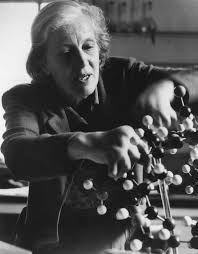
PROFESSOR DOROTHY CROWFOOT HODGKIN

Dorothy Crowfoot Hodgkin was a pioneering British chemist, who was awarded a Nobel Prize for Chemistry in 1964 for the determination of the structures of penicillin and vitamin B12.

THERE WAS MAGIC ABOUT HER PERSON

Dorothy was born in Cairo on 12 May 1910, to parents involved in the colonial administration of countries in North Africa and the Middle East. Although she was sent to a local school in England under the charge of her grandparents, it was her mother who encouraged her love of science. For Dorothy’s sixteenth birthday, her mother gave her a book on crystallography, the specialism she would go on to develop. When later asked to name her heroes, she would cite the medical missionary Mary Slessor, Margery Fry, the Principal of Somerville College, and, above all others, her mother.

Dorothy fought to be allowed to study science with another girl at the school, and in 1928 was awarded a place to read chemistry at Somerville College, one of the first two women’s colleges in Oxford. Having not studied the Latin required for the Oxbridge entrance exam, her headmaster privately tutored her.

In 1932, Dorothy graduated with a first-class degree from Oxford, the third woman to ever do so.

a brilliant mind and an iron will to succeed

After her graduation, Dorothy moved to Cambridge to undertake doctoral research on pepsin. She returned to Somerville College in 1934 and remained there until her retirement in 1977. After establishing an X-ray laboratory in the Natural History Museum, she began work on determining the structure of insulin.

In 1939, she was asked to solve the structure of penicillin by the Australian pathologist Howard Florey. By 1945 she had succeeded in describing in three dimensions the arrangement of its atoms, which led to her election to the Royal Society in 1947. She went on to discover the structure of vitamin B12 in the mid-1950s, leading to her election in 1960 as the first Wolfson Research Professor of the Royal Society.

Dorothy finally won the Nobel Prize in 1964 for her work on penicillin and vitamin B12, after being nominated multiple times. The following year she was made a member of the Order of Merit, Britain’s highest honour for achievement in science, the arts and public life. She was the second woman to do so, preceded only by Florence Nightingale.

In 1969, she finally cracked the structure of insulin, 34 years after she had taken her first X-ray image.

SHE RADIATED LOVE

Dorothy devoted much of her life to encouraging and supporting the work of scientists in developing countries. She had acquired from her mother a concern for social inequalities, and developed a particular concern for the threat of nuclear war. In 1976, she became president of the Pugwash Conference on Science and World Affairs, stepping down in 1988, the year after the Intermediate-Range Nuclear Forces Treaty imposed a global ban on short- and long-range nuclear weapons systems.

Dorothy retired from public life in 1988, although she made it to the 1993 International Union of Crystallography Congress in Beijing, aged 83. Dorothy died on 29 July 1994.

GABBY EDLIN

Everyone deserves a bloody good period

Gabby Edlin is the founder and CEO of Bloody Good Period, an organisation supplying asylum seeker drop-in centres with menstrual products.

No doubt you are already reaching deep into your cavernous pockets to fetch your card and donate to this incredible lady’s organisation, which you can do RIGHT HERE.

Back to the blog!

together, we can eliminate period poverty

In 2016, Gabby began volunteering at a drop-in centre for asylum seekers and refugees. After reading a Maya Oppenheim article on period poverty among women experiencing homelessness, Gabby raised the issue of sanitary products in the centre. She learnt that menstrual products, a necessity for half of the population on a monthly basis, were classed as “emergency” items, to be given out only to those who really needed them.

Recognising that all menstruating people really need menstrual products, Gabby began asking friends to donate sanitary products for her to take to the centre on Facebook. This was the beginning of Bloody Good Period.

WHAT IS PERIOD POVERTY?

In May this year, the UN special rapporteur on extreme poverty described poverty in the UK as “systematic” and “tragic”. The report showed a fifth of the UK’s population, some 14 million people, living in poverty, with 1.5 million people experiencing “destitution”, meaning that they had less than £10 a day after housing costs, or that they had to go without at least two essentials such as shelter, food, heat, light, clothing or toiletries during a one-month period.

Period poverty refers to having a lack of access to sanitary products due to financial constraints. Surveys have found that somewhere between one in four to one in 10 women and girls in the UK have experienced period poverty, with one survey finding that over a quarter of those experiencing period poverty had missed school or work as a result.

While period poverty can affect women of any background, certain groups are more likely to be affected. These include women experiencing homelessness, asylum seekers and refugees.

A SUSTAINABLE FLOW
OF MENSTRUAL PROTECTION FOR THOSE WHO CAN’T AFFORD IT

Bloody Good Period now supplies 25 asylum seeker drop-in centres based in London and Leeds. The organisation also directs regional collections to other food banks and centres in the UK. To anyone coming to one of their drop-ins, their products are available to take away without without judgement, prejudice or charge. Bloody Good Period is also cognisant of temporary intensive relief efforts, supply around 1500 packs of pads to survivors of the Grenfell fire disaster in June 2017.

MYRA BRADWELL

Myra Bradwell (née Colby) was born in the US state of Vermont on 12 February 1831. 

In 1873 the US Supreme Court sat for the case of Bradwell v. State of Illinoisin which Myra challenged Illinois’s refusal four years prior to grant her a licence to practice law on the basis of her sex.

Although her application was refused, in 1890 the Illinois Supreme Court granted Myra a law licence with the US Supreme Court following suit in 1892. As both courts granted the licence as of the date of her original application, Myra is known as the first woman lawyer in the state of Illinois and the first woman to be admitted to practice before the US Supreme Court.

THE ABILITY AND POWER OF THE LITTLE WOMAN

As for many girls at the time, Myra’s formal schooling consisted of literature and the arts, with an emphasis on training girls for their expected roles as wives and mothers.

While working as a teacher at the seminary in which she finished her schooling, Myra met a young James Bradwell. Born into a family of poor English immigrants, James financed his education by doing manual labour. The Colby family did not approve of him as a suitor for their daughter, and when the couple eloped Myra’s brother pursued them with a shotgun in an attempt to stop the marriage. Nevertheless, they were married in Chicago on 18 May 1952. 

In 1854 the Bradwells settled in Chicago, Illinois, where James completed his legal studies. In 1855, he was admitted to the Illinois bar and in time became a Cook County judge and a state legislator.

IT WOULD SEEM TO BE A NOVEL ENTERPRISE FOR A LADY

On 3 October 1868, Myra began publishing the Chicago Legal News. In its maiden edition Myra wrote,

“[in] presenting to the public the Chicago Legal News, we offer no apology and make no promises, except to say that we shall do all we can to make it a paper that every lawyer and business man in the north-west ought to take.”

The publication of the paper caused a stir, with the Chicago Sunday Times noting that, “it would seem a novel enterprise for a lady.” However, the paper soon gained in popularity and success, with the American Law Review observing in 1894 that, “[p]ractical newspapermen and prominent lawyers at once predicted its failure, but they underestimated the ability and power of the little woman.”

At the paper’s inception a legal doctrine known as coverture was still in force whereby, upon marriage, a woman’s legal rights and obligations were subsumed by those of her husband. Coverture prevented married women from owning property or making contracts in her own name. With her husband’s notoriety and the family’s influence within the legislature, approval was secured for Myra to act as president of the Chicago Legal News Publishing Company without the usual legal disabilities that accompanied married women’s attempts to enter business.

The “little woman” made sure that the publication was indispensable to every lawyer in Illinois, and eventually the nation. The statutes printed in the Chicago Legal News were valid as evidence in court, making a subscription to the publication an essential tool for lawyers. 

In the great Chicago fire of 1871, Myra had the presence of mind to save the subscription book for the newspaper. Myra solicited advertisements from legal book publishers, recognising that lawyers in Chicago would have to replace their law libraries. In addition, Myra printed and sold back copies of the Chicago Legal News to replace those that were lost in the fire, and the Illinois legislature designated the Chicago Legal News as the official publisher of all legal records lost in the fire.

Legal news was not the only component of the newspaper. Myra used the paper to advocate many social and legal reforms and women’s issues, particularly in her weekly column “The Law Relating to Women”. 

THE DISABILITY IMPOSED BY YOUR MARRIED CONDITION

Before she began the Chicago Legal News Myra had been studying law for several years. At the time the study of law could be undertaken at a law school or under the supervision of a practicing attorney. As a woman Myra was prohibited from attending law school, so she read law with James. 

In 1869, at 38 years old, Myra passed the Illinois bar exam with high honours and applied to practice law in Illinois. Myra submitted to the Illinois Supreme Court a certificate of qualification signed by a circuit judge and a state’s attorney. 

On 7 October 1869, Myra received a written reply from the court reporter in which her application was denied due to the “disability imposed by your married condition”. Until the legislature removed Myra’s coverture declared marital disability, the court regarded itself powerless to grant her application. 

In Bradwell v. Illinois, 83 U.S. (16 Wall.) 130 (1873), Bradwell appealed to the United States Supreme Court, claiming that refusing to admit her to the bar on the basis of her sex violated her 14th Amendment rights.

In an 8-1 decision, the Supreme Court rejected Myra’s application. In his concurring opinion, Justice Bradley referred only to “the law of the creator” as interpreted by the “founders of the common law”: 

The paramount destiny and mission of woman are to fulfill the noble and benign offices of wife and mother. This is the law of the Creator. And the rules of civil society must be adapted to the general constitution of things, and things cannot be based upon exceptional cases.

Myra never again requested entry into the Illinois bar.

THE LAW RELATING TO WOMEN

Myra was also heavily involved in the women’s suffrage movement, with her audience of lawyers, judges, and lawmakers giving her enormous influence as a women’s rights advocate. It is possible that Myra has been ignored as a leader of the suffrage movement because of her differences with Susan B Anthony of the National Women’s Suffrage Association, the movement’s leading historical figure. 

The rift with Anthony occurred over a disagreement about supporting the 14th and 15th Amendments. Anthony did not support the Amendments that gave black people the right to vote because she felt the amendment should also have included women. Myra and other suffragists disagreed and urged a break with Anthony. They formed a second women’s suffrage organisation, the American Women’s Suffrage Association. Both Myra and James served on the Association’s legislative committee.

Myra also used her considerable influence and drafting skill to further the cause of women’s rights. For example, in 1873, Myra drafted a bill that James introduced to the Illinois legislature giving women the right to run for office in the Illinois public school system. The bill passed, allowing women to be elected to an office for which they themselves could not vote. James and Myra also ushered legislation through the state legislature allowing women to become notaries public, to keep their own earnings and giving women equal rights to the custody of their children. 

In 1890, upon a request from James, the Illinois Supreme Court admitted Myra to the bar without a reapplication. The court recognised her status retroactively to the date of her initial 1869 application, making her the first woman to be admitted to the Illinois state bar. In 1892, she became the first woman admitted to practice before the US Supreme Court. 

Myra died on 14 February 1894. Myra took great pride in the fact that her work made it possible for other women to enter the legal profession. Her own daughter, Bessie Bradwell Helmer, became a practicing attorney in 1882. After Myra’s death, her daughter continued her mother’s legacy and took over the running of the Chicago Legal News.

“THE COURTS ARE NOT CONCERNED AT ALL WITH THE MERITS OF LEAVING OR REMAINING IN THE EU”: JUDICIAL REVIEW OF DECISION TO TRIGGER ARTICLE 50 REJECTED

In a judgment handed down on Monday the Court of Appeal rejected an appeal for permission to judicially review the prime minister’s decision to notify the European Union of the UK’s intention to withdraw from the EU, as well as the notification itself.

BACKGROUND

On 13 August 2018, four applicants issued a claim for judicial review. The applicants sought orders quashing the prime minister’s decision to serve the article 50 notification, and the notification itself.

Susan Wilson, the lead applicant, is the chair of Bremain in Spain, a pressure group campaigning for the rights of British expats and a second referendum on Brexit.

On 21 September 2018, Supperstone J refused permission to proceed. The applicants sought reconsideration of that decision at an oral hearing, which Ouseley J heard on 7 December, delivering his judgment on 10 December 2018 and refusing the application. In Wilson and others v R (on the application of ) v the Prime Minister [2019] EWCA Civ 304 the applicants appealed against Ouseley J’s decision.

APPLICATION

The applicants claimed that the prime minister’s decision to notify the EU of the UK’s intention to leave the trading bloc was unlawful. This claim was premised on the contention that the decision and subsequent notification were based on the result of a referendum that was itself unlawful as a result of corrupt and illegal practices, notably offences of overspending committed by those involved in the campaign to leave the EU.

JUDGMENT

While acknowledging that some bodies and individuals involved in the referendum campaign breached campaign financing requirements, the Court found that these breaches did not mean that the referendum result was “procured by fraud”.

Giving judgment for the Court, Hickinbottom LJ held that:

[T]here is simply no evidential basis for the proposition that the breaches, or any of them, are material in the sense that, had they not occurred, the result of the referendum would have been different.

Aware of the precarious position the Court occupied, he went on to say that:

[F]or the court to declare void the decision to notify withdrawal or the notification itself would clearly be a constitutionally inappropriate and unlawful interference in the due democratic process.

The Court considered that the applicants had no real prospect of success on the merits of the claim, and for these reasons the Court refused the applicants permission to proceed with the appeal.

SUPREME COURT RULES CRIMINAL RECORDS DISCLOSURE RULES INCOMPATIBLE WITH HUMAN RIGHTS

On 30 January 2019 the Supreme Court gave judgment in R (on the application of P) v Secretary of State for the Home Department and others. This was an appeal by the Home Office against Court of Appeal decisions declaring the statutory schemes for the disclosure of criminal records incompatible with human rights.

BACKGROUND

The respondents to the appeals had all been convicted, or received cautions or reprimands, for relatively minor offences. For example, in 1999 respondent P had received a caution for the theft of a sandwich. In the same year, she received conditional discharges for the theft of a book worth 99p and for failure to surrender to the bail granted to her after her arrest for that offence. At the time, P was homeless and suffering from undiagnosed schizophrenia.

In each case the relevant convictions and cautions were “spent” under the statutory schemes. This means that the offences would not normally have to be revealed under standard employment checks.

However, the respondents were required to disclose their offences under exceptions to the statutory schemes. These exceptions include where an offence results in a custodial sentence, and where someone has more than one conviction. The respondents believed the required disclosures had prejudiced their ability to find work.

In each case, the respondents challenged the statutory schemes as being incompatible with Article 8 of the European Convention on Human Rights 1950 (“ECHR”), protecting the right to respect for private and family life.

JUDGMENT

The Supreme Court held that Article 8 of the ECHR was engaged. In order to be compliant with the ECHR, the statutory schemes had to pass two tests: firstly, they had to be “in accordance with the law” (the “legality test”) and secondly, the current boundaries of the schemes had to be acceptable (the “proportionality test”).

As the statutory schemes are highly prescriptive, mandatory and leave no room for discretion, it could not be said that they are not in accordance with the law. They are operated in a way that is clear and defined, and thus pass the legality test.

However, the Court decided that two elements of the existing statutory schemes are disproportionate. Firstly, the requirement for the disclosure of multiple convictions does not achieve its purpose of indicating propensity, as it applies irrespective of the nature, similarity, number or time intervals of offences. Secondly, the schemes fail to distinguish between warnings and reprimands issued to young offenders, which is incompatible with the aim of rehabilitation after mistakes made in childhood. The boundaries of these elements of the statutory schemes are thus incompatible with the respondents’ Article 8 rights.

WHAT HAPPENS NOW?

Christopher Stacey is the co-director of Unlock, a charity that intervened in the case. He described the judgment as “a crucial step towards achieving a fair and proportionate filtering system that takes a more calibrated and targeted approach towards disclosing criminal records.”

However, the judgment does not end the current statutory schemes. If a court finds UK legislation incompatible with human rights, it is up to parliament to decide whether to amend it. The statutory schemes will thus remain in place for the moment, meaning that the respondents’ situations will not change immediately. Upon hearing the judgment P said:

I am glad that this case is over, but will only celebrate when the government finally changes the law and enables me to move on, to work and finally make plans for my future.

Design a site like this with WordPress.com
Get started